

How Does a Magnetic Compass Work?
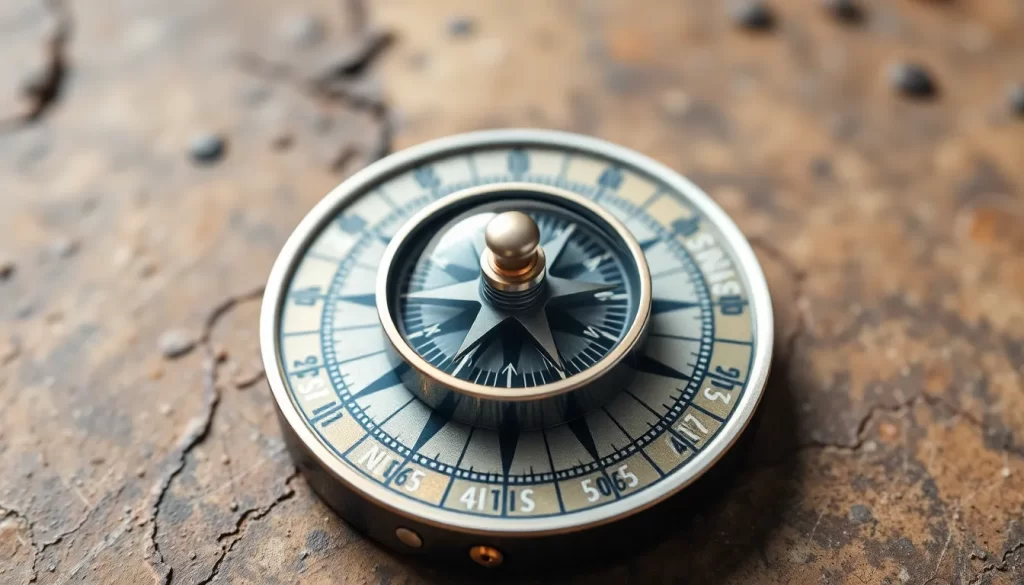
A magnetic compass works because a magnetized needle is free to rotate and align with the local direction of Earth’s magnetic field. The marked end of the needle indicates magnetic north, while the compass dial converts that alignment into a heading or bearing. The reading is not automatically the same as true north, and nearby metal, electrical equipment, magnetic dip, motion, or poor handling can introduce error. This article explains the operating principle, the difference between magnetic and true north, the main causes of inaccurate readings, and the steps needed to use a magnetic compass correctly.
Table of Contents:
Earth’s Magnetic Field
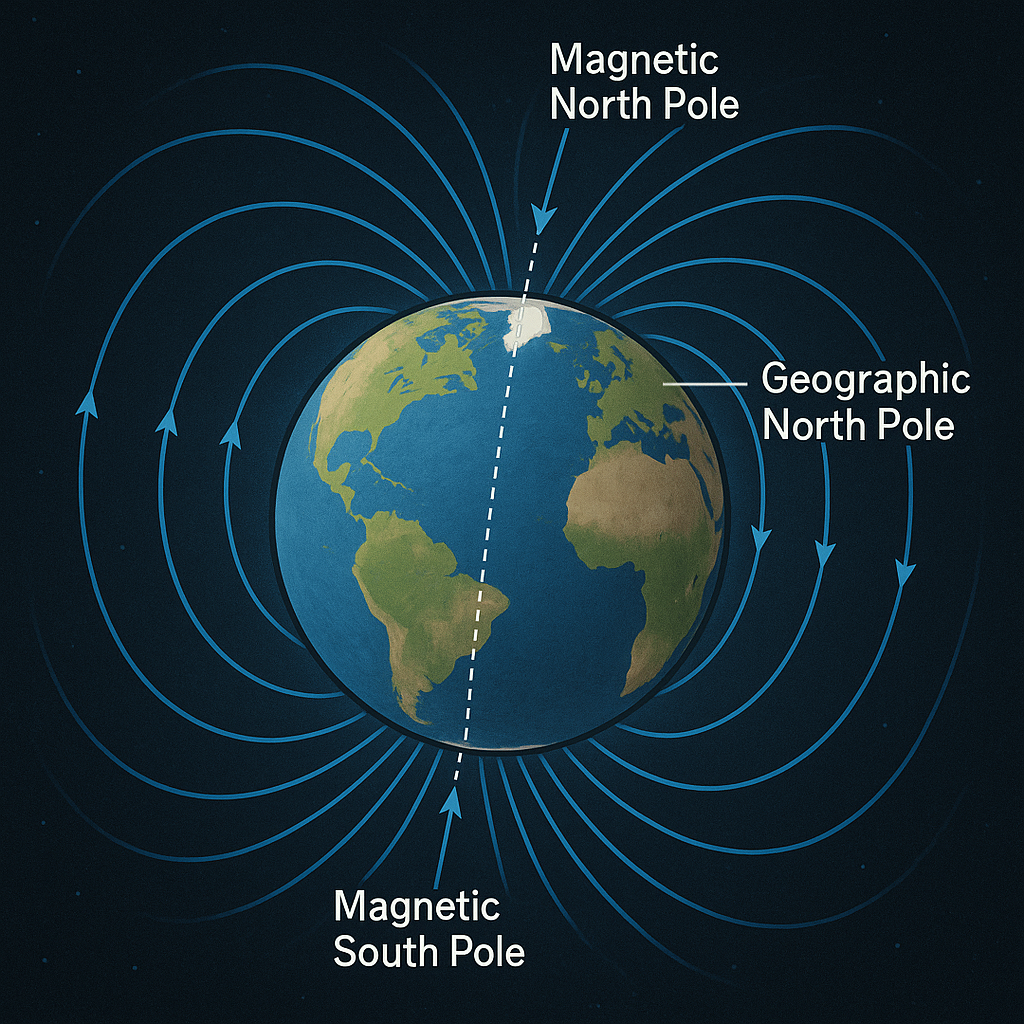
Earth behaves like a large, irregular magnet because moving electrically conductive material in its outer core generates a global magnetic field. Near the surface, that field has both a horizontal component and a vertical component. A handheld compass responds mainly to the horizontal component, which gives the needle a north–south orientation when the instrument is held level.
Why the Compass Needle Points North
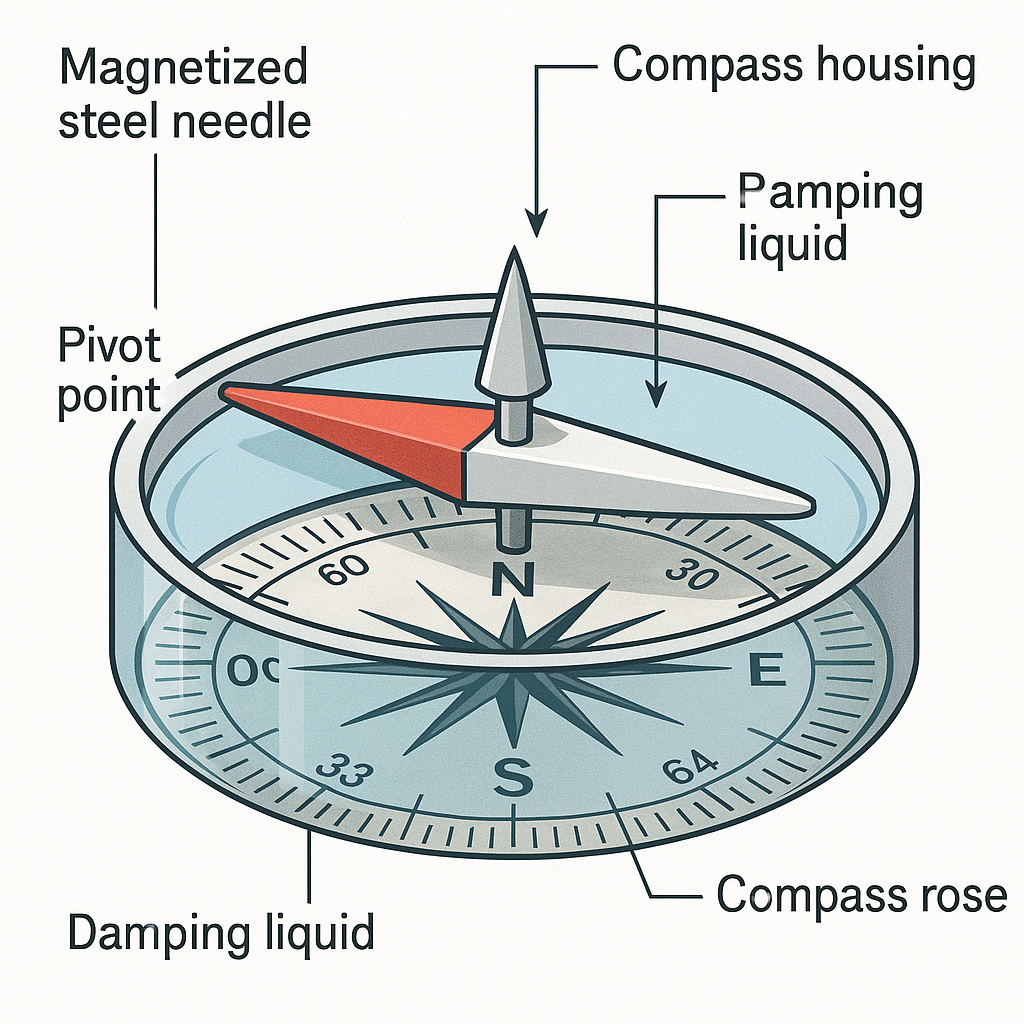
The compass needle is a small permanent magnet with two poles. When it is placed in Earth’s magnetic field, the field exerts a turning force, or torque, on the needle. That torque rotates the needle until its magnetic axis is aligned as closely as possible with the local field direction.
The needle is not pulled in a straight line toward a distant point at the top of the globe. Instead, it turns in response to the magnetic field present at the user’s location. The end marked in red or identified with an arrow is the north-seeking end. It points toward magnetic north under normal conditions, while the opposite end points in the reverse direction.
How the Pivot and Dial Produce a Reading
A low-friction pivot allows the needle to rotate with minimal resistance. Once the needle settles, the user reads its position against a compass rose, fixed index line, or graduated dial marked from 0° to 360°. North is normally 0° or 360°, east is 90°, south is 180°, and west is 270°.
Some compasses contain a transparent damping liquid that slows oscillation and helps the needle settle more quickly. Dry compasses achieve the same basic directional function without a liquid-filled capsule. In either design, the pivot, needle, dial, and housing must work together without preventing free movement. Their materials, magnetization, assembly, and testing are covered separately in our guide to how a compass is made.
Earth’s Magnetic Field Is Three-Dimensional
The field does not run perfectly parallel to Earth’s surface. It has direction, intensity, and a vertical angle known as magnetic inclination or dip. A traditional compass must allow the needle to respond to the horizontal component without dragging against the housing. Electronic instruments such as a magnetometer can measure field strength and direction more directly, but a magnetic compass turns that field into a simple visual heading.
True North vs. Magnetic North
A compass needle normally indicates magnetic north, but maps and geographic coordinates are generally referenced to true north. Understanding the difference is essential whenever a compass reading must be compared with a map, survey line, or planned route.
What Is True North?
True north is the direction from a location toward the geographic North Pole, where Earth’s rotational axis meets the surface. Lines of longitude converge there, and north-oriented maps usually use this geographic reference rather than the direction shown directly by a magnetic needle.
What Is Magnetic North?
Magnetic north is the local direction indicated by the north-seeking end of a freely moving compass needle. It is determined by Earth’s magnetic field, which is uneven and changes gradually. The magnetic pole also moves over time, so magnetic north is not a permanently fixed geographic location.
Magnetic Declination or Variation
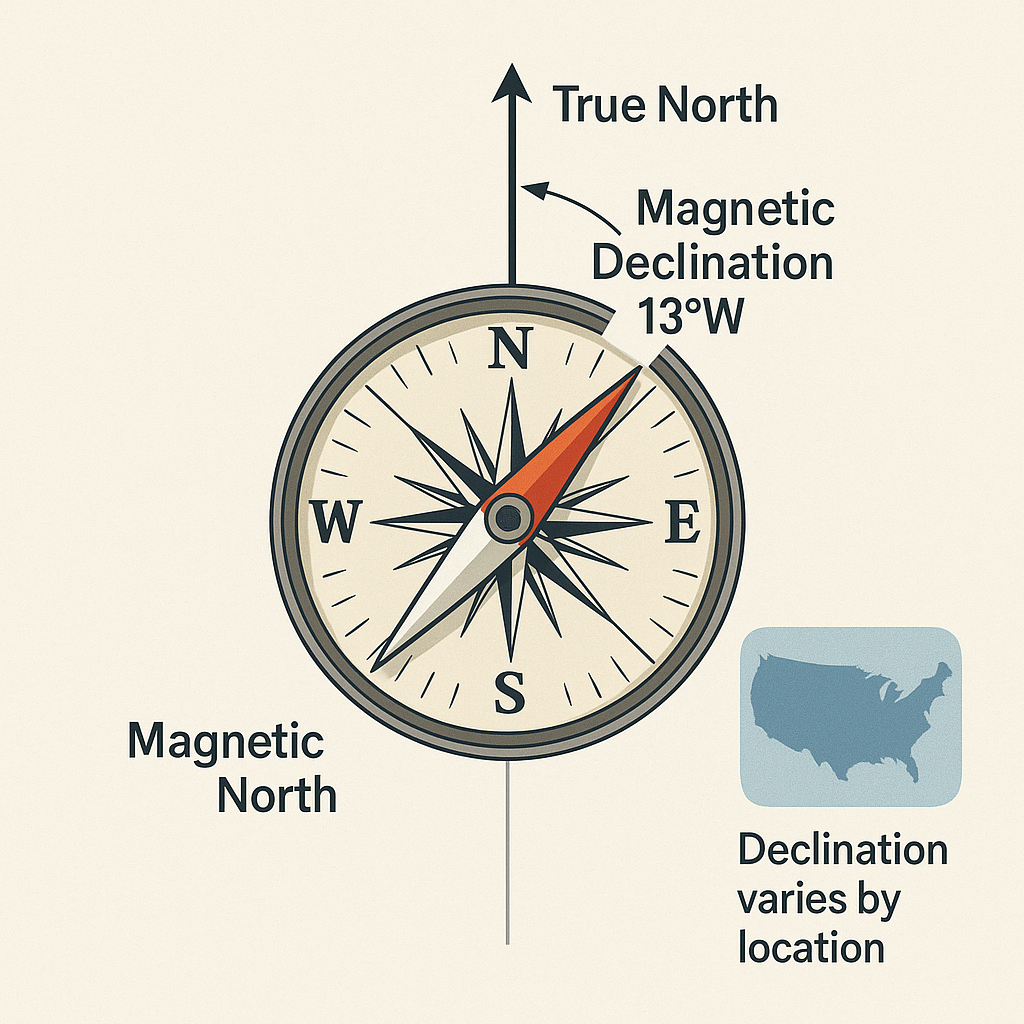
The horizontal angle between true north and magnetic north is called magnetic declination, also known as magnetic variation. Declination may be east or west, depending on the observer’s location. A compass can work correctly and still disagree with a true-north map because it is indicating a different reference.
Declination varies from place to place and changes over time, so accurate navigation requires a current value for the location. Some compasses allow the user to set declination directly. With a fixed-dial model, the correction must be applied manually when converting between magnetic bearings and true bearings.
Why Magnetic Compasses Can Be Inaccurate
A magnetic compass is simple and dependable, but its reading can be affected by the environment, the instrument, and the way it is used. Some differences are predictable and correctable, while others indicate local interference or mechanical trouble.
Magnetic Declination vs. Compass Deviation
Declination is the natural angular difference between magnetic north and true north at a particular place and time. Deviation is an error caused by magnetic fields near the compass itself. A properly functioning compass can show declination, but nearby equipment, a vehicle, or a steel structure can create deviation.
Nearby Metal and Electrical Equipment
Magnets, speakers, tools, steel furniture, vehicles, reinforced structures, motors, electrical wiring, and operating electronic equipment can deflect the needle. The required separation distance depends on the object and the strength of its field, so there is no universal safe distance. Move away from the suspected source and compare readings from more than one position.
Iron-rich rock and other geological magnetic anomalies can also alter a local reading. In surveying areas where magnetic direction was unreliable, instruments such as the solar compass historically provided a nonmagnetic way to establish direction.
Magnetic Dip and Needle Balance
Because Earth’s field has a vertical component, a compass needle tends to dip downward at one end. The direction and amount of this inclination vary geographically. A needle balanced for one magnetic region may tilt enough to rub or respond poorly in another. Some compasses are balanced for a particular zone, while global-needle designs are intended to tolerate a wider range of magnetic inclination.
Motion-Related Errors in Aircraft and Vehicles
Installed aircraft compasses can display turning, acceleration, deceleration, and oscillation errors because the magnetic system is moving while responding to both horizontal and vertical field components. These effects are especially important in aviation. A handheld hiking compass held steadily and level is not affected in exactly the same way, although motion can still prevent the needle from settling long enough to obtain a reliable reading.
Tilt, Friction, Damage, and User Error
A compass that is tilted may allow the needle or card to contact the capsule. A damaged pivot, contamination, mechanical wear, or an obstructive bubble can also slow or stop movement. Users can introduce additional error by reading before the needle settles, confusing the north and south ends, misreading the degree scale, or forgetting to account for declination.
How to Use a Magnetic Compass Correctly
How to Take an Accurate Reading
- Move away from obvious interference. Avoid vehicles, steel structures, large tools, magnets, speakers, motors, and energized electrical equipment whenever practical.
- Hold the compass level. A level position allows the needle or compass card to rotate without rubbing.
- Allow the magnetic element to settle. Do not take the reading while it is still swinging or while your hand is moving.
- Read the correct index or bearing line. Follow the instructions for the specific compass design, especially if it has a rotating bezel, sighting system, or movable card.
- Repeat the observation. Turn slightly away, return to the direction, and compare the new reading. A large change may indicate interference or poor technique.
- Check from another position. Moving a short distance can reveal whether a nearby object or local anomaly is influencing the needle.
How to Account for Magnetic Declination
Use a current declination value for the location and confirm whether it is east or west. On a compass with adjustable declination, set the correction according to the manufacturer’s instructions before navigating. On a nonadjustable model, apply the correction when converting between magnetic and true bearings. Do not assume that a declination diagram printed on an old map is still exact, because the magnetic field changes over time.
When a Reading Should Be Questioned
Question the reading when the needle will not settle, changes significantly after you move, points differently near metal or electronics, or appears to drag against the housing. A damaged, leaking, or visibly tilted compass may also be unreliable. When the indicated direction conflicts strongly with the terrain, map, sun position, or another independent reference, stop and identify the cause before continuing.
Why Magnetic Compasses Still Matter
Magnetic compasses remain valuable because they require no battery, satellite signal, cellular service, or software. They provide immediate orientation and can be checked visually, making them useful for hiking, emergency navigation, fieldwork, maritime operations, and aviation backup. Different types of compasses adapt the same magnetic principle to map work, sighting, ships, aircraft, and specialized environments. Electronic navigation may be faster and more detailed, but a properly used mechanical compass remains an independent reference when powered systems are unavailable or questionable.
A magnetic compass works by allowing a magnetized needle or card to rotate under the torque produced by Earth’s magnetic field. The instrument indicates magnetic north, which must be distinguished from true north through declination. Nearby magnetic sources, dip, motion, mechanical problems, and poor handling can affect the reading. Holding the compass level, avoiding interference, allowing it to settle, and applying current declination are the essential steps for obtaining a dependable direction.
Learn more about compasses: