

Compass Information: History, Types, Uses and Navigation
A compass is a navigation instrument used to determine direction and maintain orientation. Although the magnetic compass is the best-known version, modern navigation also relies on gyrocompasses, solar compasses, magnetometers, and electronic heading systems.
This compass information hub brings together guides about how compasses work, their historical development, their main features, modern uses, and the different instruments designed for land, sea, surveying, and digital navigation. Explore the sections below to learn more about each topic.
Explore Our Compass Guides and Resources
Begin with our collection of interesting facts about the compass. This introductory guide explores its origins in ancient China, its importance to explorers, the difference between magnetic and true north, and its role in smartphones and modern navigation.
What Is the Purpose of a Compass?
The primary purpose of a compass is to help a person, vessel, aircraft, or vehicle determine direction. A traditional magnetic compass uses a magnetized needle that aligns with Earth’s magnetic field, providing a stable directional reference when landmarks, the sun, or the stars are not visible.
A compass does not usually show a person’s exact location. Instead, it helps users identify directions, maintain a heading, follow a bearing, or orient a map. When combined with maps, nautical charts, GPS, or other instruments, a compass becomes part of a more complete navigation system.
Different Types of Compasses
Compasses can be classified according to how they determine direction and the environments in which they are used. Magnetic compasses rely on Earth’s magnetic field, while gyrocompasses use Earth’s rotation to indicate true north. Other designs include baseplate, lensatic, marine, surveying, solar, digital, and smartphone compasses.
Each type serves a different purpose. A hiker may prefer a lightweight baseplate compass, a ship may use a marine compass or gyrocompass, and a smartphone determines orientation with an electronic magnetometer. Explore the guide below for a detailed explanation of the main compass varieties.

Key Features of a Compass
The features of a compass depend on its design and intended use. A simple magnetic model may contain only a magnetized needle and directional markings, while an advanced navigation compass can include several components for measuring and following precise bearings.
- Magnetic needle: Aligns with Earth’s magnetic field.
- Compass housing: Protects the needle and displays directional markings.
- Cardinal directions: Shows north, east, south, and west.
- Rotating bezel: Allows users to set and follow a bearing.
- Direction-of-travel arrow: Indicates the route the user should follow.
- Baseplate: Helps align the compass with routes and grid lines on a map.
- Declination adjustment: Compensates for the difference between magnetic north and true north.
Not every compass includes all these features. Marine, aircraft, diving, surveying, and digital instruments use specialized components adapted to their operating environments.
How Are Compasses Used Today?
Compasses are still used today in hiking, orienteering, surveying, maritime navigation, aviation, emergency preparedness, military operations, and scientific research. They remain valuable because users can determine direction when internet access, cellular service, or satellite navigation is unavailable.
Modern technology has also expanded the uses of the compass. Smartphones, vehicles, drones, robots, mapping equipment, and navigation devices may use electronic sensors to detect orientation. In many applications, compass data is combined with GPS, accelerometers, and gyroscopes to provide more accurate positioning and movement information.
The Solar Compass and Surveying
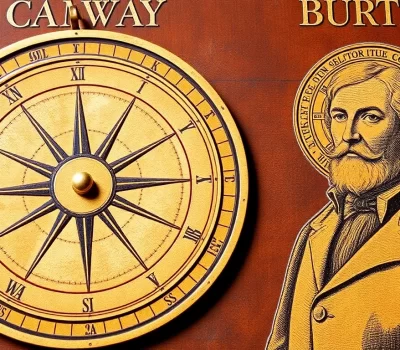
A solar compass determines direction by observing the position of the sun rather than relying directly on Earth’s magnetic field. This makes it useful in areas where magnetic minerals or local interference could affect an ordinary magnetic compass.
William Austin Burt patented his solar compass in 1836. The instrument became particularly valuable for surveying land in regions where magnetic readings were unreliable. By combining astronomical observations with the time, date, and geographic location, surveyors could establish true north more accurately.
The Gyrocompass and True-North Navigation
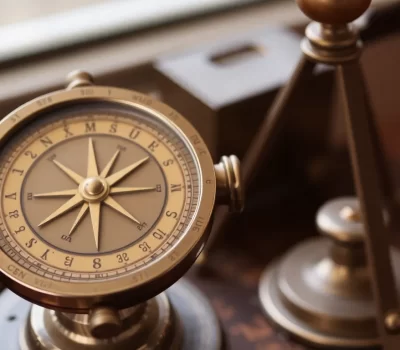
A gyrocompass is a non-magnetic instrument designed to indicate true north. Instead of following Earth’s magnetic field, it uses a rapidly spinning gyroscope together with Earth’s rotation. Because it is not attracted by nearby magnetic materials, it is especially useful aboard large metal ships.
Gyrocompasses became an important development in marine navigation because they offered a stable directional reference unaffected by magnetic deviation from a vessel’s steel structure. Modern ships may combine gyrocompasses with GPS, radar, electronic charts, and automated steering systems.
Magnetometers and Digital Navigation
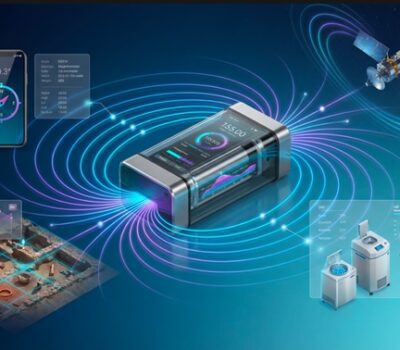
A magnetometer is an instrument that measures the strength or direction of a magnetic field. Although it is not identical to a traditional compass, magnetometer data can be used to calculate orientation and provide digital compass functions.
Magnetometers have applications in geology, archaeology, surveying, aerospace systems, vehicles, robotics, and consumer electronics. In smartphones, the magnetometer works with other sensors to determine which direction the device is facing, rotate maps, support augmented reality, and improve navigation.
Why Is the Compass Still Important?
The compass remains important because it provides one of the most direct ways to understand direction. A basic magnetic compass requires no battery, internet connection, or satellite signal, making it a dependable backup for outdoor travel and emergency situations.
More advanced compass systems continue to support transportation, mapping, science, exploration, and digital technology. From a magnetized needle carried by a hiker to a gyrocompass guiding a ship or a magnetometer inside a smartphone, compass technology continues to help people and machines orient themselves in the world.